
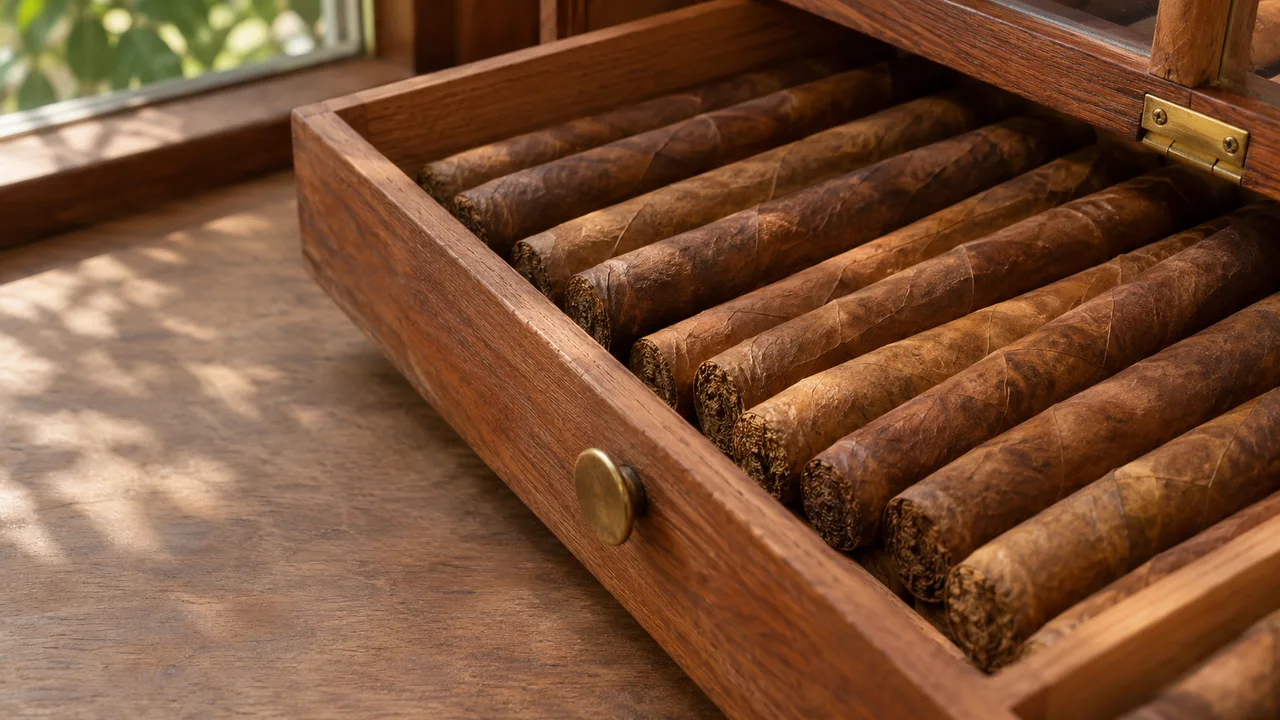
Storage decides everything
Cigars are made of natural leaf, so they respond to the air around them. In a stable, humid environment they stay in good condition. In dry air they lose their oils and become brittle, and in damp air they can grow mould.
This is why a humidor is such a worthwhile purchase if you keep cigars for more than a few days.
What ageing really does
Many enthusiasts age cigars on purpose, because they feel the flavours blend and soften over time. Others prefer the cigar fresh.
Ageing is a matter of taste, not a rule, and it only works if the cigar is stored properly for the whole time. A neglected cigar does not improve.
Plume or mould?
Occasionally you may see a fine, powdery coating on a cigar. This can be plume, also called bloom, which some people describe as crystallised oils. It is usually dry and wipes away.
Mould looks different. It tends to be fuzzy or blotchy, often blue, green or white, and it can feel damp. If you are unsure, do not smoke the cigar, and ask a tobacconist to look at it.
Signs a cigar has gone off
Trust your senses. A cigar that no longer looks or feels right is not worth the risk.
- Cracking wrapper. Usually a sign it has dried out.
- Spongy, soft body. It may have taken on too much moisture.
- Musty smell. A sour or musty aroma can point to mould or poor storage.
- Harsh, hot burn. Often the result of a dry cigar.
So when should you smoke it?
If you have stored a cigar well, there is no need to rush. Many people smoke their cigars within several months, and others keep favourites for years.
Follow the maker’s guidance, check your cigars regularly, and enjoy them when you feel ready. Tobacco use carries serious health risks, and this blog is intended for adults 21 and over.
Keep exploring
Browse more articles, or go deeper with our guides and brand pages.
All Best Cigars articles